Understanding
Hazardous Risk
Specialist advisory helping organisations understand hazardous substances risks and manage environments where fire or explosion hazards may arise.
Hazardous Risk Clarity
Helping organisations identify hazardous substances risks and manage environments where fire or explosion hazards require specialist understanding.
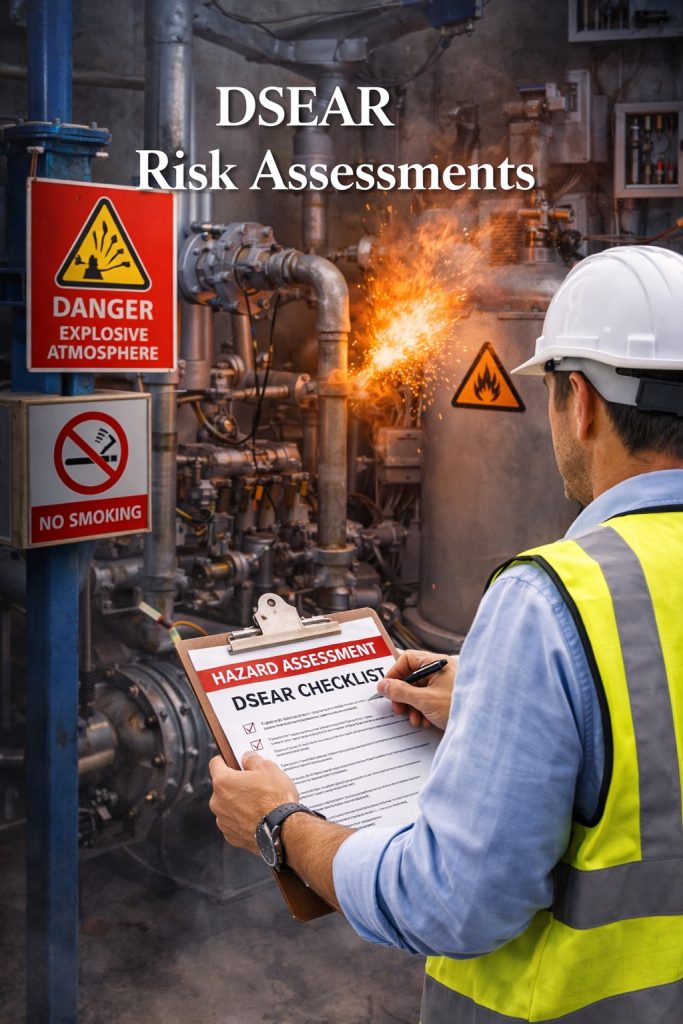
DSEAR Risk Assessments
DSEAR assessments examine how dangerous substances could create fire or explosion hazards within operational environments. This service supports organisations storing or using flammable liquids, gases or combustible dusts. The assessment identifies hazardous scenarios and evaluates potential ignition sources, helping organisations understand explosion risks and manage their responsibilities under the Dangerous Substances and Explosive Atmospheres Regulations.
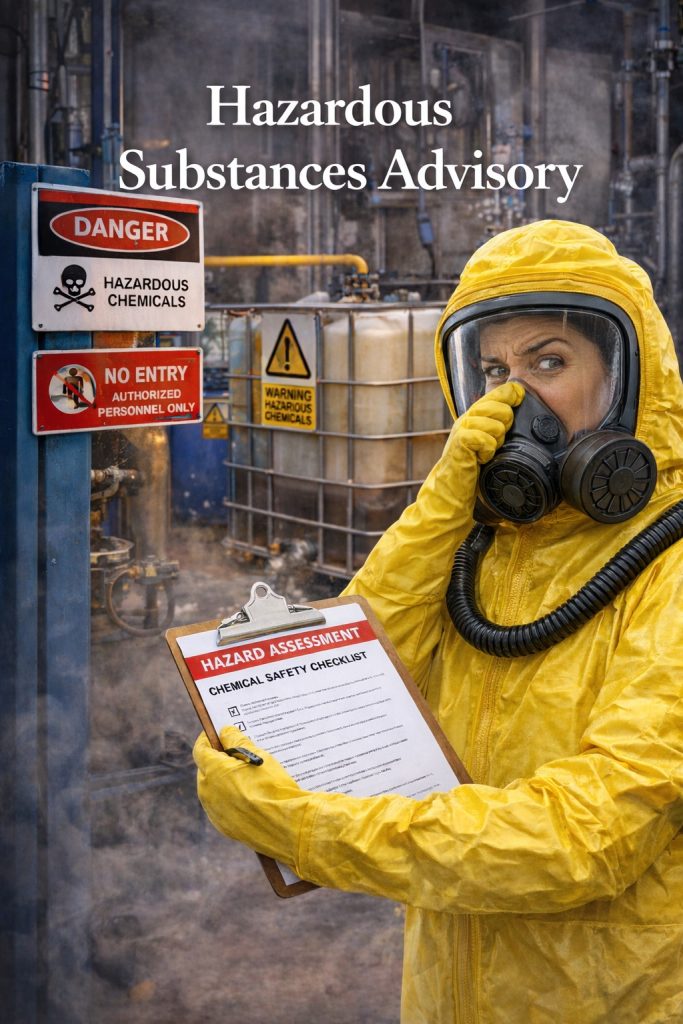
Hazardous Substances Advisory
Handling potentially dangerous substances requires careful evaluation of storage, processes and control measures. This advisory service supports organisations working with flammable or reactive materials. The review identifies hazardous substances present within operations and provides clear guidance on risk management measures that reduce the likelihood of fire or explosion incidents.
Explosion Risk & Zoning Guidance
Where explosive atmospheres may develop, hazardous area classification becomes essential for safe operations. This service evaluates processes and environments where flammable gases, vapours or dust may accumulate. Organisations receive documented zoning guidance that supports equipment selection, operational controls and regulatory compliance within hazardous environments.
Hazardous Environment Reviews
Operations involving flammable materials require periodic review of safety controls. This service provides an independent examination of existing risk controls and management practices within hazardous environments. The review helps organisations understand whether current measures remain appropriate and identifies opportunities to strengthen operational safety arrangements.
Specialist Hazardous Risk Expertise
Specialist DSEAR advisory helping organisations understand hazardous substances risks and implement effective measures to manage explosion and fire hazards.
Specialist Knowledge
Understanding hazardous substances requires technical expertise not always available within general fire safety services.
Operational Awareness
Advice reflects real-world operational environments rather than purely theoretical risk models.
Clear Hazard Identification
Assessments identify risks that may remain unnoticed during routine safety reviews.
Practical Risk Control
Guidance focuses on realistic operational safety improvements.
Review Hazardous Risk
Discuss hazardous environment risks with Apex Fire & Risk Consultancy and receive specialist DSEAR advisory for your organisation.
Address
Apex Fire & Risk Consultancy
The Maybird Centre, Birmingham Rd, Stratford-upon-Avon CV37 0HZ, UK
Contact
Tel : 0771 547 5781
E-Mail : enquiries@apexfireandriskconsultancy.co.uk
More Links
© 2026 Apex Fire & Risk Consultancy